
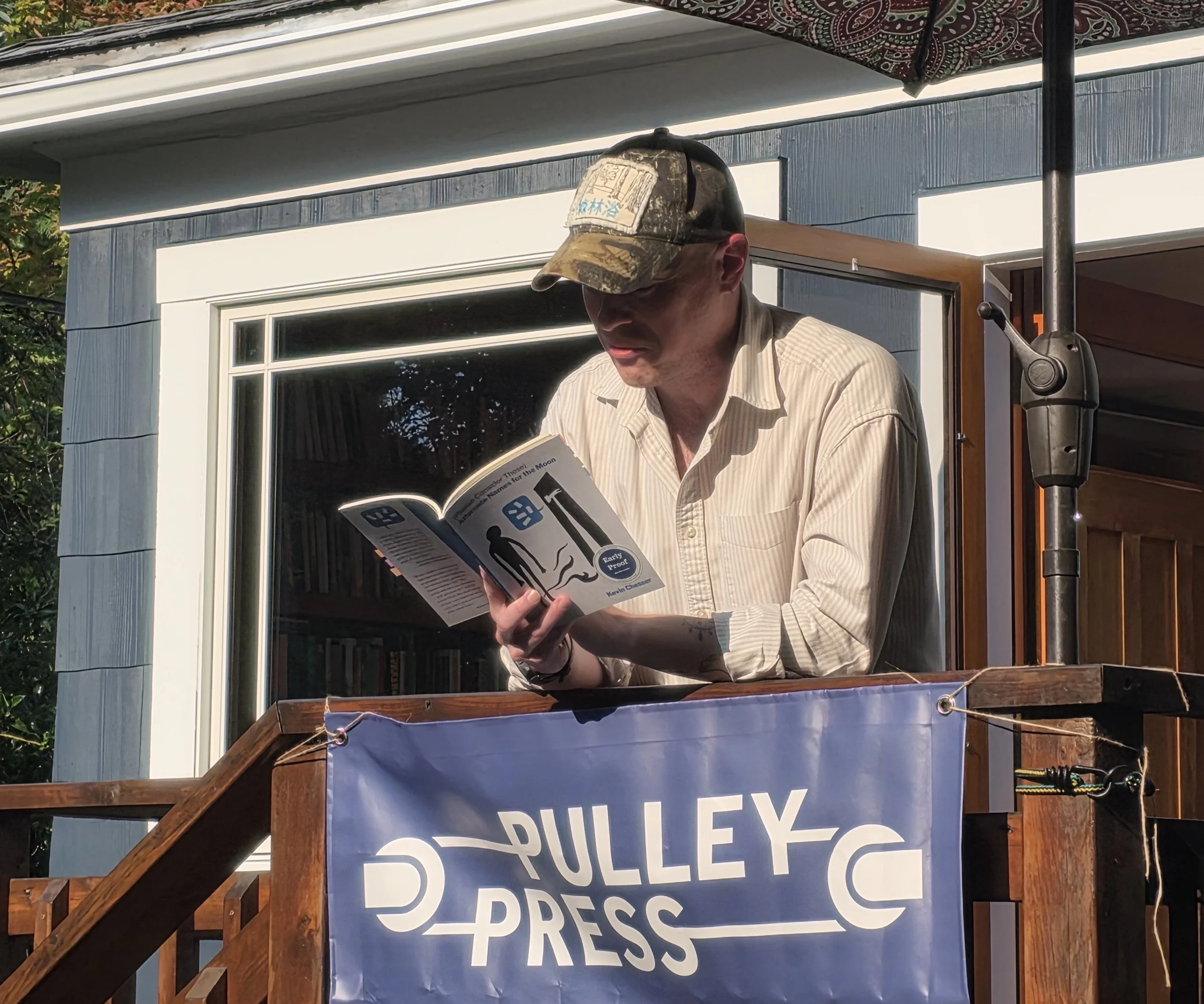
Kevin Chesser’s second collection, (Please Consider These) Alternate Names for the Moon, was released by Pulley Press on earlier this month on October 6th, 2026. A week later, Pulley's Social Media Manager Angelica Urquizo sat down with Kevin to chat about the decision behind the book’s enigmatic cover, the personal growth implicit in improving your poetry, and what it means if the moon isn’t really the moon.
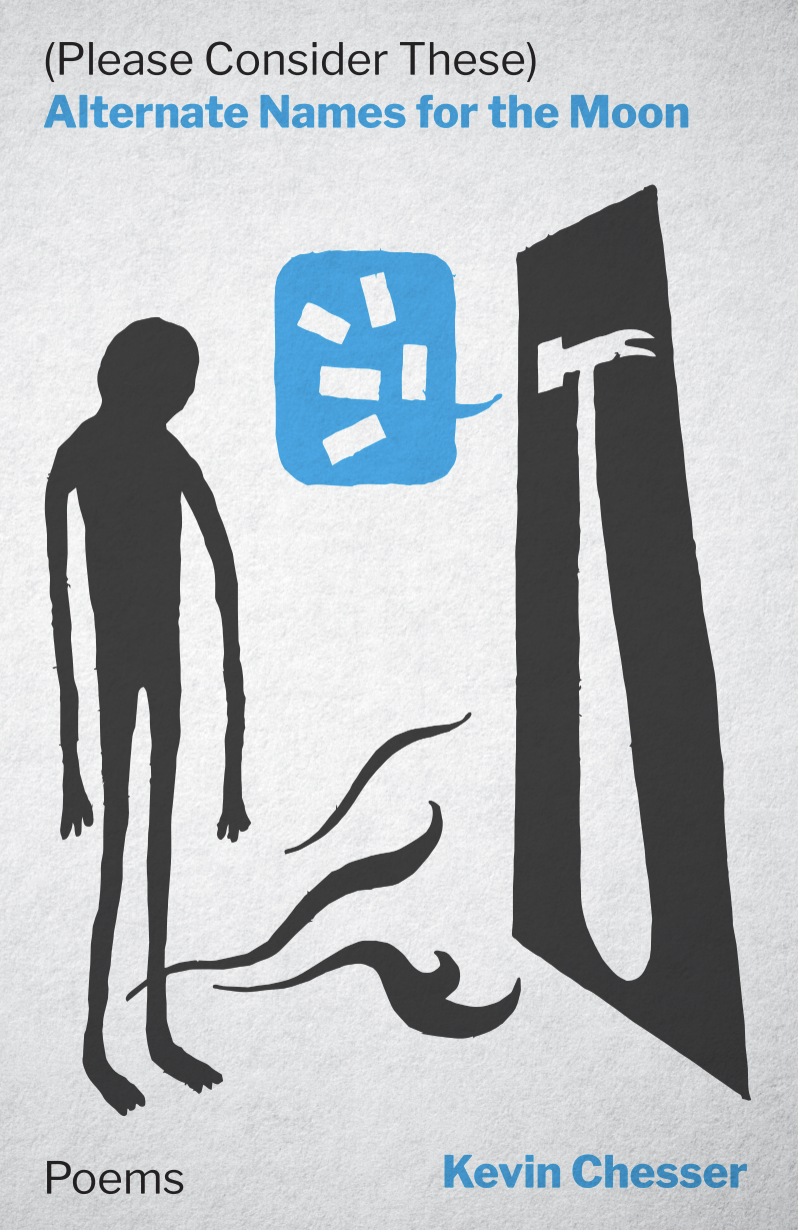
Angelica: Why the hammer cover?
Kevin: It was just my favorite from a design standpoint. It was kind of like, all of those drawings are very strange and subjective but that one seemed to be weirdly like the most unscrutable of them all. But also because of the title of the book, and the fact that there’s the hammer as the speech bubble, and it’s just dashes, right? And I thought it just logically made sense because the title of the book is a request. It’s like something that you would say and the hammer is talking, right? So, in some ways I kind of saw it, 1. I liked it because it didn’t have a moon or any planetary body in it, so it wouldn’t be on the nose. But also because I sort of interpreted it like the hammer in that strange doorway is like my subconscious talking to me, the little shadow guy, saying you know what, you’re kinda dealing with some stuff right now and you need to maybe consider some different ways of looking at how you deal with your shit. Which is kind of what the book is about. So that’s why I decided on that one. Any of them would’ve been cool but the one with the hammer definitely spoke the most.
A: Did you know it the second you saw it?
K: I think I did but I definitely went back and forth. I’m such a big fan of Cole’s work. Almost everything that he puts out is something that I love. He’s a local guy, he’s really young…he’s just a super talented guy. There was so much stuff to choose from just scrolling through his instagram. And you know, he actually did give me the original of that drawing as a gift. And one thing I didn’t realize, I wish I had it handy, but the original drawing is actually smaller than the book is.
K: Yeah, like the title of the book and the kind of conceit that the title poem sort of imparts to the book, right, is not even so much about making this funny joke about the moon specifically, but more just about the idea of like, trying to find different ways to look at your environment, and especially when you’re going through something that’s painful and the necessity of that, of looking for different names for things. Names as in, could mean, perspectives or approaches to problems, things that you’re dealing with. Specifically, for me, it was going through all those personal changes where I lost my job, things changing with my relationships, I was trying to quit drinking while I was unemployed and all of those things happening at the same time, really required me to work extra hard to try to look at things in a different way or I was just gonna circle the drain. So yeah, I think that I do like that there’s not actually a moon on the cover because that captures maybe even more of the spirit of that title poem that’s more about a conversation with yourself than it is–
A: Like it’s not really about the moon–
K: The moon is just like a great template for almost anything in poetry.
A: Ain’t that just the truth.
K: Stone cold classic. Mary Reufle–she’s one of my all time favorites and she’s got that book that’s her collected lectures which are essentially, they kind of shake out to be essays more or less, and it’s called Madness, Rack, and Honey, and she’s got an amazing lecture/essay in that collection about the moon and poetry where it’s just sort of like a waterfall of different insights into why it’s such a powerful image. A lot of that stuff is really obvious because it’s like, the other celestial body but I think she also pointed out that it’s really powerful in poetry because–this is not exactly how she says it– but because it’s actually the thing up there that’s actually easy to look at and see. You can’t really look at the sun, you can see the light everywhere, but the moon is something that is set in stark contrast and it doesn’t burn your eyes to look at it. And I think because so much of poetry is about throwing things into relief or looking for contrast that the moon tends to have a little bit more of an influential voice in poems than maybe the sun, or like the stars, the stars are more diffuse.
A: This is juicy to me, because now I’m just like… I mean I love the moon, you know, I’m witchy and poetic.
K: You’re a poet! Of course you do!
A: God I love the moon! And you know, just thinking about the transitionary, cyclical nature of the moon, it’s hidden and then it’s not. One of my favorite lines is from Sea and Fog by Etel Adnan and it’s like, “poetry takes the unsaid and leaves it unsaid,” and that’s the moon!
K: Absolutely, and I also fully realize there’s some risk inherent in titling that collection, (Please Consider These) Alternate Names for the Moon, because any time that you’re gonna sort of court that moon image in such an overt way, you are risking being corny and cliche because it’s something that’s such well-trod ground, but, you know, Dorianne Laux says in that book, “Facts About the Moon,”--
A: I actually don’t know that. Tell me more!
K: Well you know, there’s just so much of it. And I find that, I knew, I felt internally, that there was some risk that people might, that it might ring as a little cliche to people’s ears, but then I really sat and stewed on the title for a long enough period of time where I’m like, no, that’s it. That’s the thing that works. I think that archetypes and stereotypes and cliches and all those things, they are prominent for a reason. Some of those reasons are good and some of them are bad, right? And I think that’s one of the things that poets can and should do, is to kind of find the middle path between all of those things and if you can use them, and you can tap into these things that register instantly with most people as like, I know I have some understanding of the significance of that, but then kind of snaking your way in there and pulling out some fresh insights into it or finding new ways to play with those things. So hopefully that’s what the book does, it’s definitely what I tried to do in different forms.
A: I mean, I know I’m biased, but I think it does!
K: Good. I appreciate that.
A: –As a genuine reader. And I think that the parentheses really did something. You know what I mean? There’s something that feels very not-cliche because it’s already different in this way. I don’t know, it does something.
K: I appreciate you pointing out the parentheses because the parentheses are really important to me. I’ve always loved things that are titled– or titles that are formatted that way, where it’s a primary title and then a secondary title in parentheses, either before or after the primary title. I probably should’ve/could’ve written down a bunch of examples of it if I had gone looking for it. But people know what I’m saying. Because I like the idea that it’s not–I don’t know–I want people to feel like it’s something that they can approach and that they want to spend time with and I think that the tone of the book is pretty effectively expressed in the title but then also in the parentheses around the first three words. Because I think it’s respectful, you know what I mean? You’re saying, please, and not only that, but you’re putting that request in parentheses, right? It’s not to like, kind of play at being self-effacing as false humility or whatever, it’s just about like–I don’t know–sometimes I pick up a book of poetry and everything about the title and the cover and everything is like this person has written something that is about to bear down on me. Like, they’re showing off or whatever, and I like that there is, you know, there’s something conversational about it right from the very beginning.
A: It’s an invitation.
K: Exactly. It’s an invitation. And just in general, I love parentheses and hyphens, and you know, I just love punctuation marks and marks on the page. I love parentheses as a way to create an aside, add another voice to where you thought there was one voice, or to using them totally unnecessarily, that works too. That is one of the ways in more recent years that I’ve been able to kind of connect the dots for what I actually want my work to look like on the page. Whereas in the past, my approach has always been very focused on the oratory of poetry and saying it out loud, that’s something that I’ve done for– I’ve been reading at open mics and things like that for years and that’s the main way of how I test whether or not a poem actually work is if I can read it out loud to myself and it flows, it’s like if it flows when I say it, then I can find a way to make it work on the page, but if it just works on the page but maybe doesn’t flow when I’m saying it outloud, it’s a lot harder to make it go the other way. So playing with punctuation and that sort of stuff has been really useful for me over the last few years to kind of help translate some of what I think I’m hearing when I’m reading it out loud to myself so that it’s captured in the physical product too.
A: It’s funny you say that because I’ve been noticing that when I’m looking at old poems of mine, it’s very linear and very like, “this is poem.” And now it’s like, there’s weird punctuation sometimes or no, I need a space here but a comma does not feel right but it does need breath, you know? And assonance, cadence, and consonance, just the sound it’s kinda everything to me, so yes!
K: Yeah, you know I just think that it should be about freedom, right? If it’s not about freedom, who cares? You know what I mean? And I think that, it takes time to grow into you know, different ideas of freedom and writing poems. You think that you want permission from other people to make things the way that you wanna make them but actually you’re really looking for permission from yourself. So, you know, being able to identify that as you go along, where say, you look at an old poem of yours, where it’s like, wow, this linear shape on the page, it doesn’t really do much for me anymore so I wanna try it in this different–so it has a different look on the page. I think that maybe for me, my equivalent of that is looking at older things of mine and realizing that I wasn’t giving myself to just come right out and say what I wanna say or to be vulnerable or even risk being a little cheesy or risk kind of coming off like a dime store philosopher. But I actually love all that stuff, you know? And it’s actually not so much about those moves themselves but where you place them and the context you put them in so I think that’s been a part of that permission for me. Every poet has it, you know? It just takes time to get there.
A: You mentioning this makes me think of Ricardo [Ruiz] actually, which I love that–it’s great that he’s also Pulley you know? Because he was in my MFA cohort you know, and I was sending him a poem once and he was like, respectfully, you’re not saying the thing. You’re saying literally everything BUT the thing. And of course it was super vulnerable and it’s like, well no, I can’t quite say it, I have to say it in this poetic way. And it’s so obvious you’re doing that, it’s not gonna hit because you’re not allowing yourself to just say it.
K: Just say it, yeah.
A: Sometimes you do have to just say it.
K: And you know, We Had Our Reasons is totally founded on that exact principle, which is that not only are we gonna use poems to come out and just say what we want to say but then to do it in collaboration with people who aren’t self-identified as poets. To take that and just make it so you are getting these totally clear–I won’t say raw–because they’re actually really shaped and well put together, but–
A: There’s like, a raw heart in it.
K: –there’s no dancing around these topics, you know what I mean? [Yeah] You know exactly, you know here are these little stories of what people have been through, there’s no dancing around it with trying to be more lyrical than what is necessary. And that’s just a thing that poets do, that’s part of the searching.
A: Since you mentioned Mary Reufle, that also got me curious about your epigraphs and what else was inspiration a lot for your poems, what writers are you in conversation with and kind of coming back to or if you particularly did with this. Also wondering if music did–music influences me so much–just kinda curious about those now.
K: Yeah, I think that earlier on a lot of the poems that I was writing that were kind of on the road to what would become the sort of core body of work for this book had a lot more music in it. Sometimes that’s just a good prompt – I’m listening to a song and there’s just a line that I like, and I think about like, one of the easiest things you can do is to just create–if I’m trying to get a poem started–just create a scene where somebody, like the speaker or the character in that poem is listening to the same song as me. And where do they go with that? I have one where it was like, Nosferatu listening to Rubber Soul [Beatles], or whatever. It’s not a very good poem but it actually ended up being a good lesson for myself in how to use or to not use that device. And epigraphs are more of a different thing for me. And I think a lot of poets would feel similarly, but a little goes a LONG way. Sometimes I will open a book of poetry and I will see that you know, there’s almost a whole paragraph’s worth of quoted material to open the book, and I’m like [audible gasp through teeth]. The more there is–the more epigraph content and just number of epigraphs that you have, you’re raising the stakes there, you know what I mean? If I’m gonna use an epigraph from Anne Carson to open a poem, I’m really kinda setting up a very, very high mark to clear. So actually I think a lot of times having epigraphs be lines from songs or lines from movies helps kind of bring it down to more eye level for me. So I’m not creating this super high art thing that the poem then has to aspire to, it’s just a little garnish instead of this super important thing that has to contextualize the whole poem that the poem has to live up to. So I think you gotta be really careful with it. That’s why I was so happy that we ended up keeping the opening epigraph from Russel Edson because that one I think is just, just perfect. It doesn’t set up too high of a standard. It’s not setting up this thing where you think that now I’m gonna go live up to the mark that that author left.
A: Yeah, that makes sense. And also, note to self!
K: I mean I think it’s great to play and experiment with them. I could see, you know, maybe sometimes I might go through a period where I wanna add an epigraph to everything but it’s a totally different question of whether or not that then those poems and that form with the epigraphs actually make it out into the world somewhere but you don’t know whether it works or not until you just try it and sit with it for awhile.
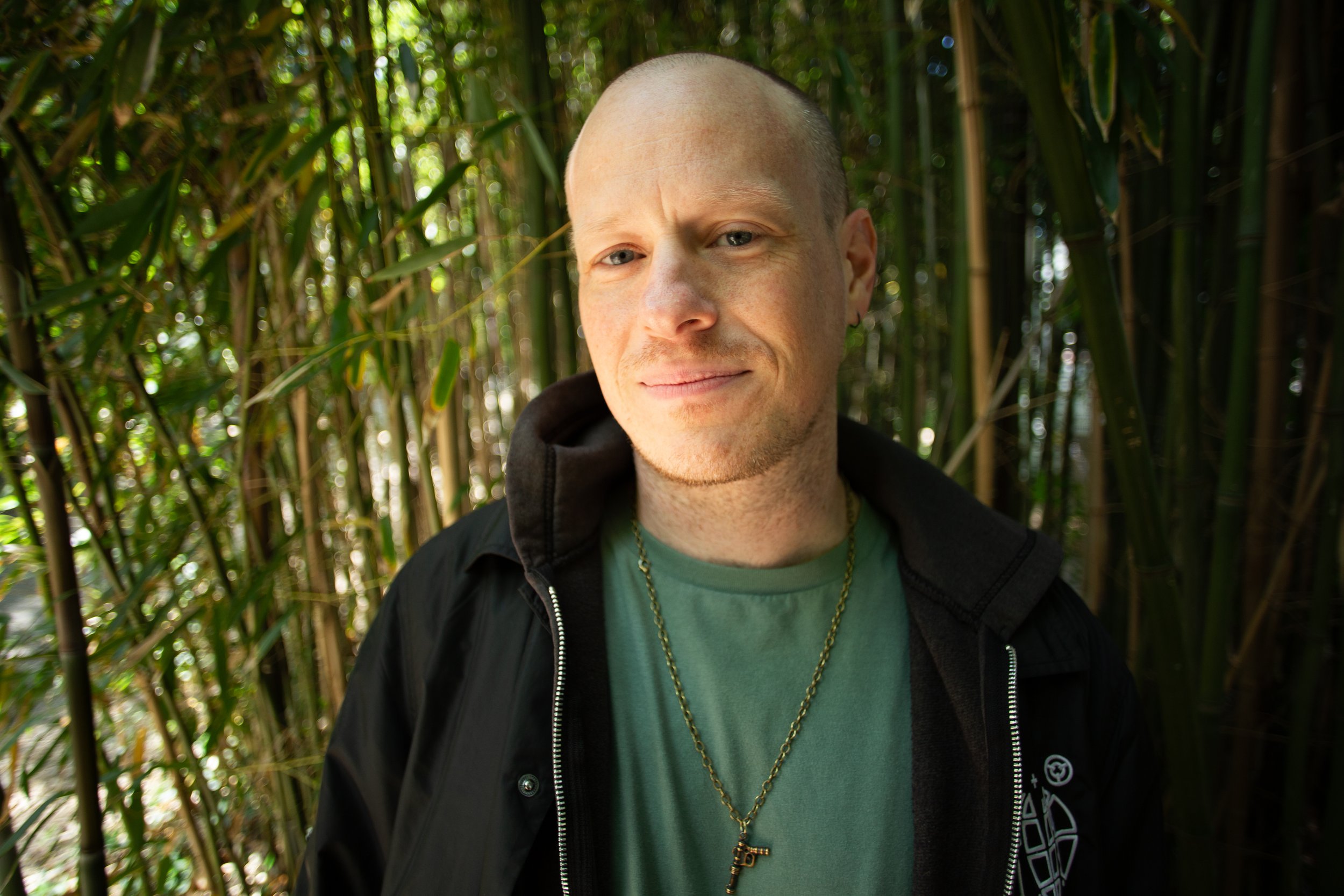
Kevin Chesser lives in Thomas, West Virginia, in the heart of the Allegheny Mountains. Home to roughly 600 people, the town is known around the region for its vibrant local arts community. His poems can be found or are forthcoming in Passages North, Annulet, DIAGRAM, Spectra Poets, Only Poems, Empty House Press, elsewhere, Pithead Chapel, BRUISER, and others. His previous collection of poems, Relief of My Symptoms, was published in 2023 by Ghost Palace Press. He is also a musician, with an album, Wizard Clipp, released in 2021. He earned his MFA in creative writing from West Virginia Wesleyan College, and from 2017-2019 was a member of the Travelin’ Appalachians Revue, an artist collective and mobile festival celebrating Appalachia’s literary, punk, and experimental music scenes.
